
Online customer service
Every question you ask can be matched with a suitable answer


diagnosis and treatment of infertility, first/second/third generation IVF (including
          egg/sperm donation), microsperm retrieval, embryo freezing and resuscitation, artificial
          insemination (including husband's sperm and sperm donation), paternity testing, chromosomal
          disease
          diagnosis, high-throughput gene sequencing, endometrial receptivity gene testing and other
          clinical
          technology applications. Many of these technologies are at the leading level both domestically
          and
          internationally.


When families need to seek overseas medical support for their reproductive journey, Kyrgyzstan provides new possibilities for many families with its open legal framework for assisted reproduction and relatively reasonable cost.
In this context, Tulip International Reproductive Center, as a highly regarded professional institution in Kyrgyzstan, has always been a focus of customer attention for its stable clinical success rate.
This time we have invited experts from Tulip to deeply analyze the logic behind the success of in vitro fertilization, and explore the core links and influencing factors that determine the final pregnancy outcome.
Clinical achievements of Tulip International Reproductive Center:
The clinical pregnancy rate reached 92.4%
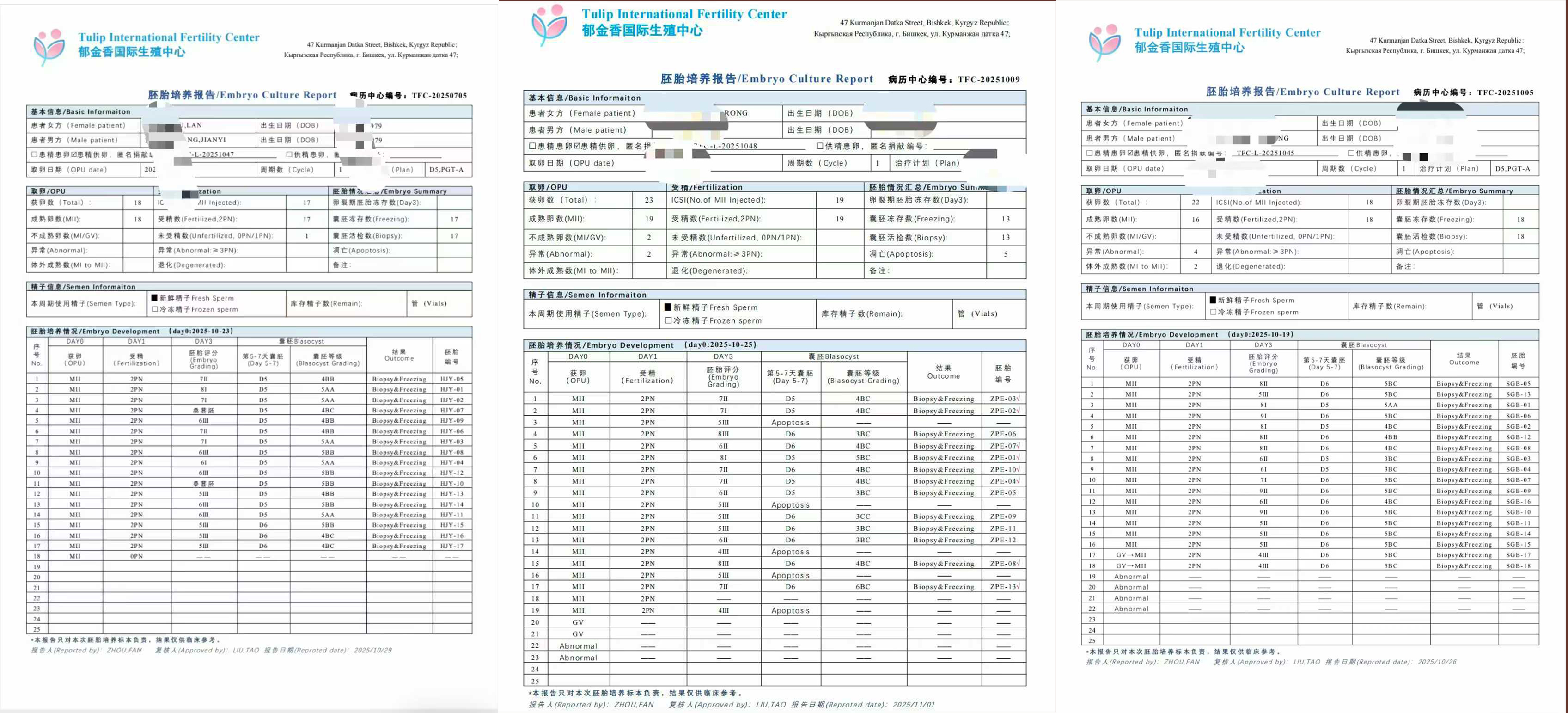
According to the clinical data statistics of the IVF laboratory at Tulip International Reproductive Center in the third quarter of 2025 (August October), the key indicators are as follows:
Embryo formation rate: 88.75%
Rate of PGT-A detection for blastocysts: 90.1%
Embryo implantation rate: 91.5%
Clinical pregnancy rate (after transplantation): 92.4%
Tulip International Reproductive Center is committed to providing customers with comprehensive and high standard reproductive services, covering multiple fields such as in vitro fertilization (IVF), pre implantation genetic testing (PGT-A), fertility preservation (egg freezing), and third-party assisted reproduction (such as L donation and assisted reproduction).
The advantages of the center are reflected in the following aspects:
【1】 Integrated Chinese funded service system: From hospital senior management to core service teams, they are all composed of experienced Chinese professionals. This background ensures zero communication barriers and a deep understanding of customer needs. The center has integrated the Tulip Newborn and Postpartum Center and self operated caring mother care villas, creating a comprehensive and one-stop service ecosystem from early consultation, medical intervention to later settlement.
【2】 Precise laboratory technology: The core of the center, the embryo laboratory, has introduced internationally synchronized advanced equipment, especially the Time lapse culture system. This system can provide a stable and undisturbed culture environment for embryos, and record their entire development process through continuous dynamic imaging. This allows embryologists to screen based on dynamic developmental data (morphological dynamics) of embryos, rather than solely relying on static morphology at a certain point in time, in order to more scientifically select embryos with high implantation potential.
【3】 Experienced interdisciplinary medical team: The medical strength of the center is composed of a group of reproductive endocrinologists, clinical embryologists, and obstetricians who have worked in top public reproductive hospitals in China for many years. They adopt a multidisciplinary collaboration (MDT) model to develop and implement more targeted and efficient diagnosis and treatment plans for difficult cases such as advanced age, repeated implant failures, and complex endocrine problems.
【4】 Highly customized diagnosis and treatment path: We understand that each customer's physical condition is unique. Therefore, the center abandons the "assembly line" treatment and flexibly adopts various ovulation induction schemes such as micro stimulation and modified natural cycles based on the customer's age, ovarian function assessment (such as AMH, basal FSH levels), and past treatment history. The goal is to balance the quantity and quality of retrieved eggs and minimize the risk of ovarian hyperstimulation syndrome (OHSS).
【5】 Third generation test tube technology (PGT-A): PGT-A is a technique for screening the chromosome number and structure of embryos before transfer. It is a key tool for addressing transplant failure or early miscarriage caused by chromosomal abnormalities (aneuploidy) in embryos, especially for women over 38 years old, clients with a history of recurrent miscarriage or family history of chromosomal abnormalities, who can benefit significantly. By transferring embryos with normal chromosomes, not only can the live birth rate of a single transfer be increased by 10% -15%, but it can also effectively shorten the time period for obtaining healthy babies.
Revealing the Decisive Factors Behind Success Rates
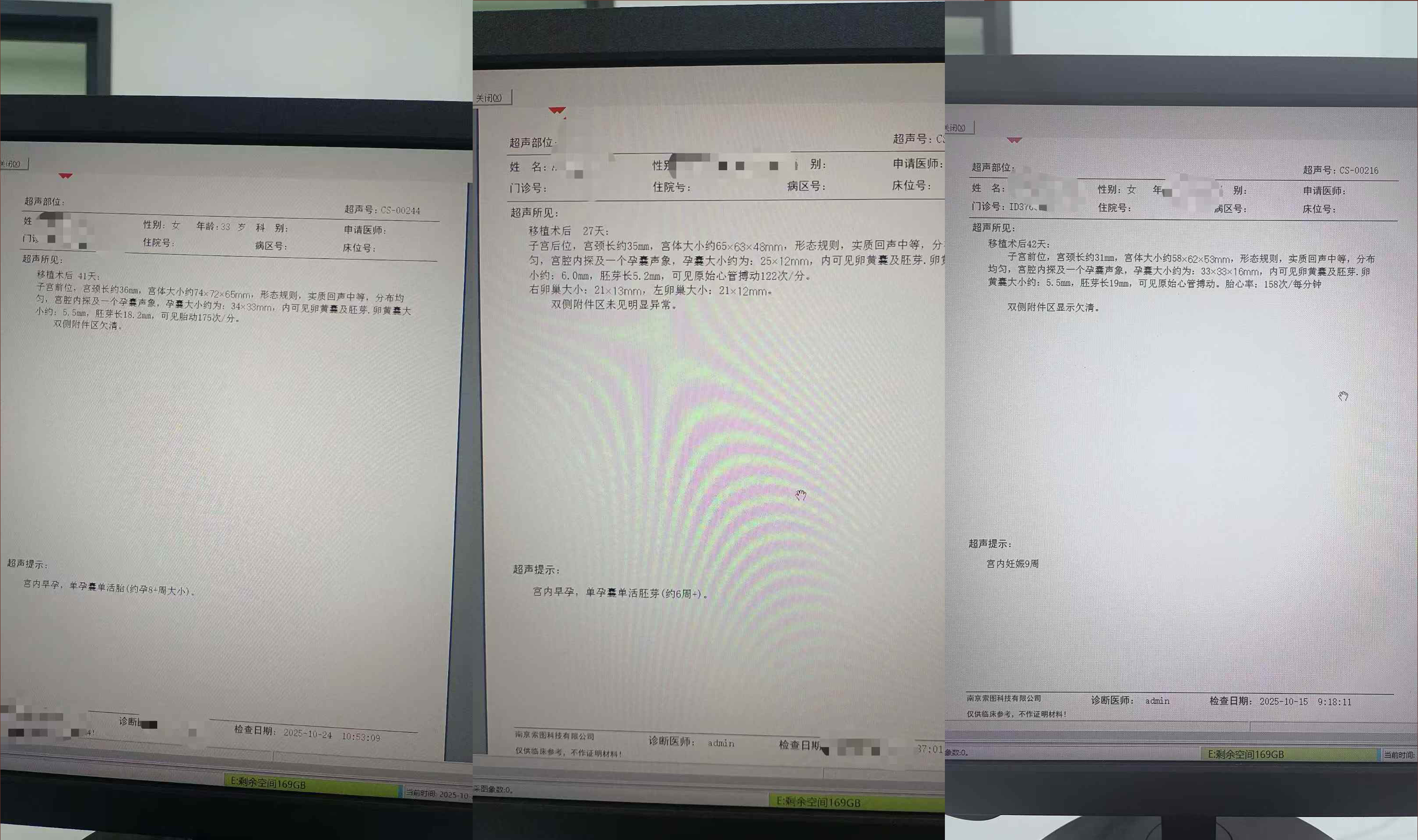
The success of in vitro fertilization is a systematic engineering that involves multiple interrelated links. The following five aspects are the core that determine the final outcome:
1. Female age: a fundamental physiological condition that cannot be ignored
Age is the primary natural factor affecting women's fertility. It mainly affects from two dimensions: one is the decrease in the number of eggs, that is, the decline in ovarian reserve function; The second is the decline in egg quality, manifested by a sharp increase in the probability of chromosomal abnormalities (aneuploidy) within the egg cell. For example, the rate of chromosomal abnormalities in eggs of a 25-year-old woman may be less than 25%, while by the age of 40, this proportion may reach as high as 80%. This directly leads to significantly lower implantation rates and live birth rates in older women after transplantation, even if they obtain embryos.
2. Embryo quality: the ultimate test of laboratory technology
The developmental potential of an embryo is derived from the quality of the sperm and egg itself, as well as being highly dependent on the "blastocyst" technology and environment in the embryo laboratory. Embryologists at Tulip International Reproductive Center utilize advanced tools such as time difference culture systems to observe embryonic development details that traditional methods cannot capture, such as whether the time nodes of cell division are regular and whether fragments are produced, thus establishing a more accurate embryo evaluation system. A well managed laboratory can maximize the cultivation of high-quality sperm egg complexes into blastocysts with high implantation potential.
3. Endometrial receptivity: the "landing environment" for embryo implantation
The endometrium is not always suitable for embryo implantation, it has a specific 'implantation window' period. The receptivity of the endometrium depends on its thickness (ideally 8-12mm), morphology (clear trilinear sign under ultrasound), and sufficient blood flow supply. These indicators together constitute a microenvironment suitable for embryo implantation. The team of doctors at Tulip will ensure optimal reception of the client's endometrium during transplantation through precise hormone drug regulation and rigorous ultrasound monitoring, achieving "synchronization" between the embryo and endometrium.
4. Technology and Equipment: Stable and Reliable Infrastructure
Embryos are extremely sensitive to environmental fluctuations during the days of in vitro culture. Any small changes in temperature, humidity, or gas concentration can have irreversible effects on its development. Therefore, the core of a top tier embryo laboratory lies in having a set of precision equipment that can operate stably for a long time. The tulip international reproductive center is equipped with German imported embryo incubators and workstations, which can simulate the environment close to the mother's fallopian tube for embryos. At the same time, the laboratory's strict air purification system (HEPA and VOC filtration) ensures air quality and provides the most solid foundation for the healthy growth of embryos.
5. The overall health status of the patient: the influence of systemic factors
Reproductive health does not exist in isolation, it is closely related to the overall health status of the human body. Uncontrolled metabolic diseases (such as obesity, diabetes), thyroid dysfunction, and immune system disorders may interfere with ovulation, embryo implantation, and pregnancy maintenance by affecting hormone levels, increasing inflammatory response, and other ways. Therefore, a comprehensive preoperative physical examination is an essential part of the diagnosis and treatment process for tulips. The medical team will assist clients in adjusting their body mass index (BMI) to a healthy range (below 25), stabilizing various indicators such as thyroid function, and clearing potential obstacles for "good pregnancy".
Tulip Success Case Sharing
Ms. Wang, who is 41 years old, has experienced three failed test tube transplants in China, mainly due to decreased ovarian reserve function (AMH only 0.6 ng/mL) and thin endometrium.
After arriving at the Tulip International Reproductive Center, the expert team re planned her treatment path.
Firstly, a mild ovulation induction program targeting low response individuals was adopted, resulting in the acquisition of three valuable blastocysts.
Subsequently, through PGT-A testing, it was confirmed that one of the embryos had completely normal chromosomes.
In the preparation stage for transplantation, the doctor did not rush to transplant, but instead designed a two month endometrial conditioning cycle for Ms. Wang. Through drug combination and lifestyle intervention, the endometrial thickness was finally stabilized at 9mm during the transplantation window period, and the blood flow signal was good.
In the end, this precious healthy embryo was successfully transplanted, and Ms. Wang's pregnancy test was successful 12 days later, confirming that the fetus was developing well in subsequent prenatal examinations.
For fertility consultation in Kyrgyzstan, please contact your dedicated consultant
/Fertility Consultation /
Dr.Chan
Copy and add: Tulip_EnoChan
Or long press/scan the QR code to add


Tulip International Fertility Center
Technology aids fertility, fulfilling dreams for countless families
🏥 Located in downtown Bishkek, the capital of Kyrgyzstan, near the National Museum and Victory Square. It is the first Chinese-invested, officially licensed assisted reproductive hospital in the country. Founded and directly operated by Mr. Chen Yinuo (EnoChan), the center specializes in high-level fertility services including PGT (3rd generation IVF) and legal third-party reproduction for global clients, especially Chinese patients.
🌷 Technology-Assisted Fertility, Fulfilling Dreams · Patience · Integrity · Professionalism


